
Assessments
Every child learns, thinks, and experiences the world in their own way. When school feels harder than expected, emotions become overwhelming, or questions arise about your child’s development, a psychological assessment can help you understand what is happening and where to go next.
At YEG Psychology Kids, assessments explore your child’s strengths alongside their learning, attention, emotional, and behavioural needs. They can help clarify concerns, identify diagnoses when appropriate, and guide recommendations for support at home and school. Assessment reports may also provide documentation for accommodations, specialized programming, or services.
The goal is to build a clearer picture of your child so that the adults supporting them can respond with understanding and practical strategies.
“Children do well if they can.”
~ Dr. Ross Greene
Is an Assessment Right For Your Child?
Parents and caregivers often seek an assessment when they notice a gap between their child’s abilities and their everyday experiences. An assessment may be helpful if:
- Your child finds reading, writing, or math difficult despite support and practice.
- They struggle with attention, organization, remembering instructions, or completing tasks.
- They seem advanced in some areas and may benefit from additional challenge or enrichment.
- Strong emotions or behavioural concerns interfere with learning, friendships, or family life.
- Their school performance changes unexpectedly, or they become frustrated and reluctant to attend.
- You want a better understanding of how your child learns and which supports may help.
- You need diagnostic clarification or documentation to explore accommodations, programming, funding, or services.
You do not need to know exactly what is causing the difficulty before reaching out. Your psychologist can help clarify the questions an assessment may be able to answer.
How an Assessment Can Help
An assessment brings together information about your child’s abilities, experiences, and daily functioning. This can help families move from uncertainty toward a more informed plan.
Depending on your child’s needs, an assessment may help:
- Identify learning strengths and areas that require additional support.
- Explain patterns in attention, thinking, emotions, or behaviour.
- Clarify whether your child meets criteria for a diagnosis.
- Explore advanced abilities and possible enrichment opportunities.
- Recommend practical strategies for home and school.
- Guide conversations with teachers and other professionals involved in your child’s care.
- Provide documentation that may support access to accommodations or services, depending on the requirements of the school or program.
Understanding why something is difficult can also help adults respond more effectively and help children feel better understood.
What Can You Expect From a Psychological Assessment?
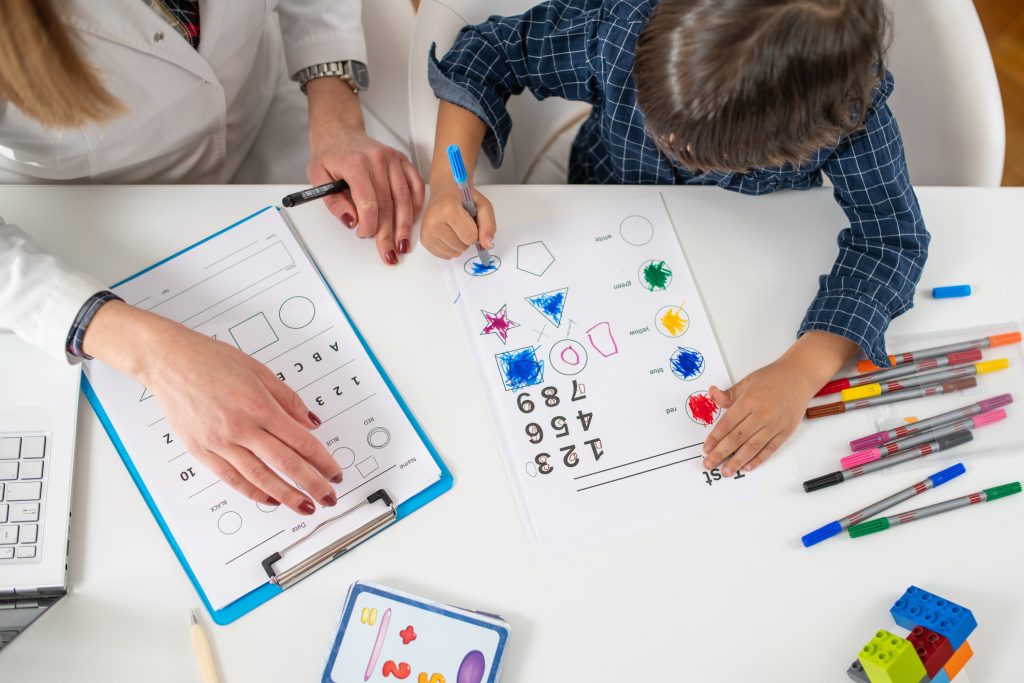
At YEG Psychology Kids, the assessment process is designed to help families feel informed and supported. Your psychologist will explain each step and adapt their approach to your child’s age, development, and needs. Initial interviews and assessment debriefs may take place virtually or in-person. All testing must be completed in-person.
In your initial meeting, your psychologist will talk with you about your concerns, your child’s strengths, and what you hope to learn. They will review relevant history, explain informed consent, discuss the proposed assessment, and answer your questions. Your child may also participate in a way that suits their age and comfort.
During the assessment process, your child may complete activities involving thinking, memory, language, or academic skills. Questionnaires and interviews may explore emotions, behaviour, attention, or everyday functioning. With appropriate consent, your psychologist may also review records or gather information from teachers and other caregivers. Tasks are explained in child-friendly language, with breaks as needed. Children are reassured that the purpose is to understand how they learn and think.
As the assessment progresses, your psychologist will bring the information together to understand patterns across different settings. They will consider your child’s developmental history and circumstances alongside the assessment results, creating recommendations that reflect your child’s individual needs.
When the assessment is complete, you will receive a written report and meet with your psychologist to discuss the findings. Together, you will review your child’s strengths, any identified concerns, and practical next steps. Findings can also be explained to your child in an age-appropriate, encouraging way. You will have time to ask questions and discuss how recommendations can be used at home and school.
Frequently Asked Questions
How long does a psychological assessment take?
The length of an assessment depends on your child's age, needs, and the type of assessment being completed. Some assessments require several testing sessions, while others may involve fewer appointments. Your psychologist will explain the anticipated timeline during your initial consultation, including when you can expect to receive the completed report.
How much does an assessment cost, and will insurance cover it?
Assessment fees vary depending on the type and complexity of the assessment. Some extended health benefit plans provide coverage for psychological assessments for dependent children, although coverage limits and requirements differ. We recommend checking with your insurance provider before booking. Our team can provide information about anticipated fees and billing.
Can my child's school request or use the assessment results?
Schools may recommend that families pursue a psychological assessment, but parents and caregivers can also seek one independently. With your consent, assessment findings can be shared with your child's school to help guide learning supports, accommodations, or programming decisions. You remain involved in decisions about how your child's information is shared.
What if my child is nervous about testing or has difficulty sitting still?
That's completely okay! Our psychologists understand that testing can feel unfamiliar or overwhelming for children. We use age-appropriate explanations, offer breaks when needed, and adapt the testing environment to help your child feel comfortable. Your child does not need to perform perfectly or know all the answers. The goal is to understand how they think, learn, and approach different tasks.
Therapists

Carmen Barrack
Registered Psychologist

Devon Edwards
Registered Provisional Psychologist

Sierra Tulloch
Registered Provisional Psychologist