

Let’s be honest: Talking to your kids about food, bodies, and health can feel like walking through a minefield. Especially if your own relationship with food or body image hasn’t always been an easy one.
Maybe you grew up hearing comments about weight at the dinner table. Maybe certain foods were labelled “bad,” exercise was something you did to earn dessert, or conversations about health were really conversations about appearance. And now, as a parent, you’re trying to figure out how to teach your children about balanced eating, movement, and taking care of their bodies without passing along some of the same messages you grew up with.
Add in the endless stream of nutrition advice, wellness trends, GPL-1 advertising, “looks maxxing,” and social media influencers telling us what we should and shouldn’t eat, and it’s no wonder parents feel overwhelmed.
So, where do you start?
The good news is that you don’t need to have the perfect relationship with food or your body to help your child develop a healthy one. What matters is the environment you create, the conversations you have, and the messages you reinforce along the way.
Here are a few things worth keeping in mind.
1. Your Kids Are Listening (Even When You Think They're Not)
Let’s start with something that can be a little uncomfortable: How you talk about your own body, and other people’s bodies, matters.
Body image doesn’t develop in isolation. The Tripartite Influence Model of body image suggests that three major influences shape how we perceive our bodies: parents, peers, and the media. These influences can reinforce appearance ideals, encourage comparison, and contribute to body dissatisfaction.
Here’s the important part: Parents can also help buffer some of those messages.
Think about the little comments that happen around the house:
- “I really need to lose a few pounds.”
- “I shouldn’t be eating this.”
“I look terrible in these jeans.” - “Wow, she’s really let herself go.”
You might not think much of these comments, but children are learning how to evaluate bodies, including their own, through the language they hear every day.
And it isn’t just about what you say about yourself. It’s also about how you talk about other people’s bodies, whether that’s a celebrity, a family member, or someone walking down the street.
This doesn’t mean you have to pretend you love every inch of your body every day. That’s not realistic, either. But there’s a difference between acknowledging how you feel and teaching your child that bodies are something to constantly critique, fix, or improve.
The takeaway? Try shifting the conversation away from appearance and toward what your body allows you to do, how you care for it, and what makes you feel good.

2. Can We Stop Calling Food "Good" or "Bad"?
This one is particularly important.
We’ve all heard it: “That’s a bad food,” “I’ve been good today,” “I need to work off that pizza,” or a new favourite, “That’s full of toxins.”
The problem? When foods become morally categorized as good or bad, children can begin to internalize the idea that what they eat says something about who they are. Eating a cookie becomes being “bad,” while choosing a salad becomes being “good.”
Food is food. It doesn’t determine your worth, your discipline, or your value as a person.
Of course, different foods offer different nutritional benefits. Some provide quick energy, some help us feel fuller for longer, and others provide important vitamins, minerals, and nutrients. A balanced approach to eating means making room for all kinds of foods rather than creating rigid rules around what is allowed or off-limits.
Instead of saying:
- “That’s junk food.”
- “You shouldn’t eat that.”
- “You’ve already had enough treats.”
Try:
- “Different foods give our bodies different things.”
- “Let’s think about what would help give us energy and keep us feeling satisfied.”
- “It’s okay to enjoy foods because they taste good, too!”
- “How is this food going to feel after we eat it?”
The goal isn’t to stop talking about nutrition. It’s to talk about nutrition without attaching guilt, shame, or moral judgement to eating.
3. Normalize Having Bad Body Image Days
Here’s something worth remembering: Nobody is immune to body image struggles.
Regardless of your gender, culture, upbringing, or background, living in a world that constantly puts bodies on display and encourages comparison can take a toll.
There will be days when your teenager doesn’t like how their clothes fit, feels uncomfortable in a swimsuit, or compares themselves to someone they see online. And there will probably be days when you feel the same way.
Rather than rushing to fix the feeling or immediately reassuring them that they look great, try making space for the experience.
Sometimes, a simple “I get it. I’ve had days like that, too” can go a long way.
You might also say:
- “It’s hard not to compare ourselves sometimes.”
- “You don’t have to love how your body looks every single day to treat it with kindness.”
- “Bodies change, and that’s a normal part of growing up.”
- “You can have a difficult body image day without needing to change anything about your body.”
The goal isn’t necessarily to achieve constant body confidence. That’s a pretty unrealistic expectation. Instead, we’re aiming for body respect: being able to care for your body, nourish it, and participate in life even when you aren’t particularly happy with how it looks.
And importantly, when your child opens up about these feelings, resist the urge to turn it into a lecture. Listening and validating first creates the space for more meaningful conversations later.
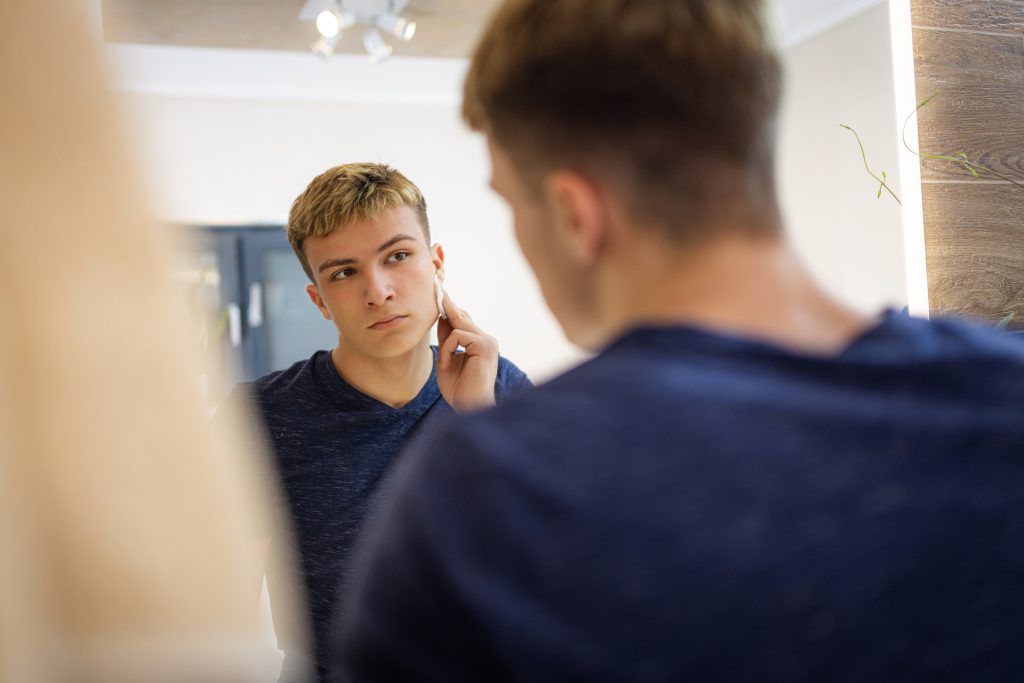
4. Less Judgement, More Curiosity (Especially About Social Media)
Ah, social media. The topic that can turn an otherwise lovely family conversation into an argument in approximately 30 seconds.
It’s tempting to respond to concerns about social media with “Just get off your phone!” or “You know that’s not real, right?”
But here’s the thing: Most teenagers already know that social media can negatively affect their mental health and body image. Many are also surprisingly savvy when it comes to recognizing filters, editing, unrealistic proportions, artificial intelligence, and curated online content.
The challenge isn’t always knowing that social media can be harmful. It’s figuring out how to navigate it when everyone else seems to be participating.
This is where curiosity becomes much more useful than judgement.
Instead of assuming your teenager doesn’t understand what they’re seeing, ask questions:
- “What do you think about that video?”
- “Do you think that image has been edited?”
- “How do you feel after spending time on that account?”
- “Do you notice certain types of bodies getting more attention online?”
- “Why do you think that content keeps showing up on your feed?”
These conversations help develop social media literacy: the ability to critically evaluate what we’re seeing, understand how online platforms influence us, and recognize the messages being communicated.
And remember, teenagers are still developing their ability to think critically and challenge social norms. Knowing that an image is edited doesn’t automatically mean they’ll stop comparing themselves to it or feel comfortable going against the trend.
Sometimes, they need a little encouragement to take that next step.
You can acknowledge the obvious together: “We both know that this isn’t representative of what people actually look like. Just look around us in the real world!”
And one more thing: If you’re going to talk about screen time and social media boundaries, be prepared to look at your own habits, too. Your teenager notices how often you’re checking your phone. Setting goals or boundaries together can feel a lot less like punishment and a lot more like a shared effort.
5. You Don't Have to Get It Perfect
Perhaps the biggest takeaway is that you don’t need to be a perfect role model to help your child develop a healthier relationship with food and their body.
You might catch yourself making a comment about your weight. You might realize you’ve unintentionally labelled a food as “bad.” You might struggle with your own body image from time to time.
That’s okay. What matters is being willing to reflect, repair, and try something different.
You can even say, “You know what? I used to talk about food that way, but I’m trying to think about it differently.”
That’s a pretty powerful lesson in itself. It shows your child that beliefs can change, that we can question the messages we’ve grown up with, and that taking care of ourselves doesn’t have to involve shame.

Final Thoughts: It's About the Relationship, Not Just the Food
Helping children develop a healthy relationship with food and their bodies isn’t about finding the perfect diet, eliminating every negative thought, or making sure they never see an unrealistic image online.
It’s about creating an environment where food isn’t something to feel guilty about, bodies aren’t constantly up for evaluation, and difficult feelings can be talked about openly.
It’s also about recognizing that health is much bigger than appearance. Nourishment, movement, rest, relaxation, connection, and enjoyment all have a place in a balanced lifestyle.
And if there’s one thing I’d encourage parents to take away, it’s this: You don’t have to have all the answers. Sometimes, the most important thing you can do is make sure your child knows they can come to you with the questions.
With warmth,
Sierra Tulloch, Provisional Registered Psychologist